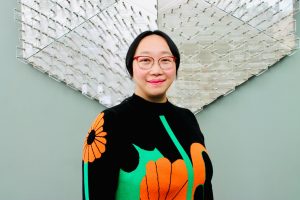
Ting Fu, PhD
Position title: Assistant Professor, School of Pharmacy
Email: ting.fu@wisc.edu
Website: Website
- Organ System/Disease Focus:
- Gastrointestinal cancer especially colorectal cancer (CRC), Inflammatory bowel disease (IBD), Metabolic dysfunction–associated steatotic liver disease (MASLD), Metabolic dysfunction–associated steatohepatitis (MASH) and Hepatocellular carcinoma (HCC)
- Aligned Research Focus:
- Dr. Fu's research primarily focuses on fundamental stem cell biology and cancer stem cell biology, with an emphasis on understanding their interactions with other cell types, such as immune and stromal cells. She actively collaborates with engineering laboratories to develop innovative approaches for studying these complex cellular interactions.

Research Description:
Dr. Fu’s laboratory investigates how host-derived and microbiota-modified bile acids (BAs) regulate intestinal and colorectal stem cell behavior. Using mouse intestinal organoids and patient-derived colorectal organoids (PDCOs), the lab studies how distinct BA species shape stem cell renewal, differentiation, and lineage commitment in the intestinal epithelium. Her work examines how bile acids influence stem cell transition into absorptive and secretory cell types, including brush border, Paneth, and tuft cells, etc.
By integrating advanced imaging, gene expression profiling, westerblot, immunostaining and flow cytometry, and targeted sequencing approaches, her lab uncovers how BA-activated signaling pathways remodel epithelial organization and define progenitor cell fate. A complementary research direction investigates how microbial BA metabolites interact with epithelial and cancer stem cells to alter growth dynamics, stress adaptation, and tissue remodeling. Together, these studies reveal fundamental mechanisms through which bile acid signaling shapes intestinal homeostasis, regeneration, and tumor biology, providing new insights into how metabolic-microbial cues regulate epithelial stem cell function.
Selected References:
1. Ting Fu, Sally Coulter, Eiji Yoshihara, Tae Gyu Oh, Sungsoon Fang, Fritz Cayabyab, Qiyun Zhu, Michael Downes#, Ronald
M. Evans#, et al. FXR regulates intestinal stem cell proliferation. Cell. VOLUME 176, ISSUE 5, P1098-1112.E18, FEBRUARY 21, 2019. DOI: https://doi.org/10.1016/j.cell.2019.01.036.
2. Fei Sun, Ke Wang, Xingchen Dong, Henry Secaira-Morocho, Alisa Hui, Chunmiao Cai, Jonathan J. Sze, Brian Low, Shirsa Udgata, Cheri A. Pasch, Tao Huan, Dustin A. Deming, Qiyun Zhu, Jiaoyang Jiang, Ting Fu#. Microbial Bile acid metabolite,
3- oxo-LCA, prohibits colorectal cancer progression. Cancer Research. 2025 Sep 16. https://doi:10.1158/0008-5472.CAN-24-3898. #, corresponding authorship.
3. Xingchen Dong, Fei Sun, Henry Secaira-Morocho, Alisa Hui, Ke Wang, Chunmiao Cai, Shirsa Udgata, Brian Low, Songlin Wei, Xinyi Chen, Ming Qi, Cheri A Pasch, Wei Xu, Jiaoyang Jiang, Qiyun zhu, Tao Huan, Dustin A Deming, and Ting Fu #. The dichotomous roles of microbial modified bile acids, 7-oxo-Deoxycholic Acid and Iso-Deoxycholic Acid in intestinal tumorigenesis. PNAS, 2024. DOI:10.1073/pnas.2317596121 #, corresponding authorship.
4. Xingchen Dong*, Ming Qi, Chunmiao Cai, Yu Zhu, Yuwenbin Li, Sally Coulter, Fei Sun, Christopher Liddle, Nataliya V Uboha, Richard Halberg, Wei Xu, Paul Marker, Ting Fu,*,# .FXR mediates macrophage-intrinsic responses to suppress colitis-induced colon cancer progression. Journal of Clinical Investigation Insight, 2024. DOI: 10.1172/jci.insight.170428. *, co-first authorship. #, corresponding authorship.
5. Xingchen Dong*, Chunmiao Cai*, Ting Fu # . FXR suppresses colorectal cancer by inhibiting the Wnt/β-catenin pathway via activation of TLE3. Genes and Diseases, 2022. DOI: 10.1016/j.gendis.2022.09.006*, co-first authorship. #, corresponding authorship.