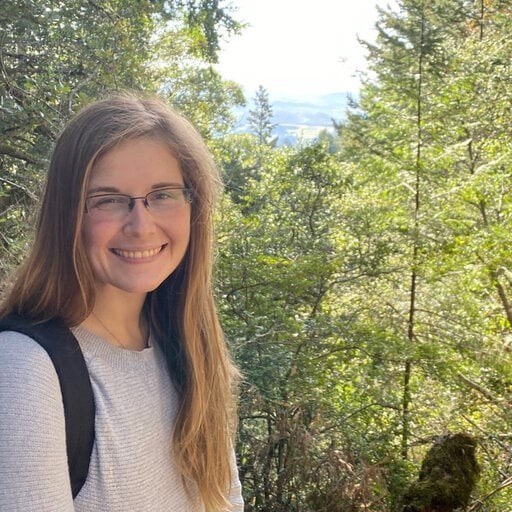
Rachel Turn, PhD
assistant professor in the Department of Comparative Biosciences at the School of Veterinary Medicine
Research Description:
Turn’s research addresses a fundamental question: what defines G0? Most cells exit the cell cycle either as quiescent, stem-like cells poised for activation or as terminally-differentiated cells with specialized functions. However, the mechanisms governing cell cycle exit and fate commitment (and whether universal G0 checkpoints exist) remain unclear.
Turn’s goal is to define how G0 is regulated across molecular and cellular scales. Disruption of quiescence contributes to diverse pathologies, including loss of islet regenerative capacity in diabetes, uncontrolled proliferation in cancer, and stem cell dysfunction during development and aging. By establishing a systems-level understanding of G0, she plans to uncover fundamental principles governing cell fate.
To this end, she discovered a critical role of primary cilia as coordinators of G0. This miniscule, extracellular-facing organelle is a critical signaling hub that houses tissue-specific GPCRs. Cilia only assemble in quiescent cells in a highly ordered process with defined molecular stages. By synchronizing cell cycle exit and using primary cilia as phenotypic signposts to track where we are in time and space, Turn can use this strategy (referred to as STAMP, or Synchronized Temporal-Spatial Analysis via Microscopy and Proteomics) for examining the dynamic cellular landscape and transient, spatially-restricted signals coordinating cell fate trajectories.
Organ System/Disease Focus:
Fate-specific and universal checkpoints across multiple organ systems with a focus on the following programs: pancreatic islet cell differentiation, adipogenesis, hematopoiesis, and aging
Aligned Research Focus:
Basic stem cell science: understanding the temporal-spatial mechanisms governing commitment to cell cycle exit and fate change
Selected Publications:
- Aziz-Zanjani MO, Turn RE, Hang Y, Asthana A, LaBrie LE, Mobedi M, Xu LA, Krawitzky M, Kim SK, Jackson PK. Metabolic STAMP for deciphering GPCR-regulated insulin secretion by pancreatic β cells. bioRxiv. 2026 Jul 12;. doi: 10.1101/2025.10.03.680349. PubMed PMID: 41256453; PubMed Central PMCID: PMC12621840.
- Turn RE, Aziz-Zanjani MO, Asthana A, Jackson PK. Strategies for multimodal spatiotemporal profiling of phosphorylation in cilia biology. J Cell Sci. 2025 Oct 15;138(20). doi: 10.1242/jcs.264159. Epub 2025 Oct 31. Review. PubMed PMID: 41171145; PubMed Central PMCID: PMC12916056.
- Turn RE, Dacks JB, Rosenberg EM Jr, Soubias O, Northup JK, Randazzo PA. ARF: the most misunderstood GTPase I ever knew – why study ARF GAPs. Front Mol Biosci. 2025;12:1668286. doi: 10.3389/fmolb.2025.1668286. eCollection 2025. Review. PubMed PMID: 41158876; PubMed Central PMCID: PMC12554972.
- Turn RE, Hilgendorf KI, Johnson CT, Han K, Aziz-Zanjani MO, Swails Bollinger S, Domizi P, Cheng R, Rabiee A, Zhu Y, Jiang Z, Asthana A, Demeter J, Svensson KJ, Bassik MC, Jackson PK. A genome-wide, CRISPR-based screen reveals new requirements for translation initiation and ubiquitination in driving adipogenic fate change. Genes Dev. 2025 Oct 1;39(19-20):1241-1264. doi: 10.1101/gad.352779.125. PubMed PMID: 40675820; PubMed Central PMCID: PMC12487700.
- Azizzanjani MO, Turn RE, Asthana A, Linde-Garelli KY, Xu LA, Labrie LE, Mobedi M, Jackson PK. Synchronized temporal-spatial analysis via microscopy and phosphoproteomics (STAMP) of quiescence. Sci Adv. 2025 Apr 25;11(17):eadt9712. doi: 10.1126/sciadv.adt9712. Epub 2025 Apr 25. PubMed PMID: 40279433; PubMed Central PMCID: PMC12024681.