
The SCRMC Annual Report is an opportunity for members and friends of the Center to explore the key research advancements, events, and awards that have defined 2025. It’s also an opportunity for Center leadership to share their vision for the future, including upcoming SCRMC events. We invite you to explore the report through the website below or via a PDF. If you prefer a hard copy or need additional assistance accessing this material, please contact rmcbride4@wisc.edu.
Directors’ Letter
Dear Colleagues and Friends,
This year has again seen important basic science and translational advances in stem cell and regenerative medicine by SCRMC members ranging from discovering how inflammation impacts muscle mass as we age to using stem cell-derived arterial endothelial cells (AECs) for grafts that can potentially be used for bypass surgery, to continued efforts to translate discovery for global impact.
These efforts advance our understanding of human biology and toxicology while also providing opportunities for revolutionary new therapies that will address a broad range of degenerative diseases. There are, however, strong headwinds as we write this with federal support for science and overall public trust in science dipping, something further complicated by a government shutdown. Nevertheless, the SCRMC will work to keep the flow of research moving forward with your help.
We recognize that many of these projects are long-term and cannot simply be turned on and off. We also recognize the incredible importance of training the next generation of stem cell researchers and supporting these trainees in turbulent times. Fortunately, the committed researchers in this field are used to challenges and setbacks in the lab, so I am confident that perseverance will win the day.
We invite you to help us win the day in a big way by supporting the SCRMC with a donation.
Sincerely,

Tim Kamp, MD, PhD
Director, Professor of Medicine, Cell and Regenerative Biology, School of Medicine and Public Health
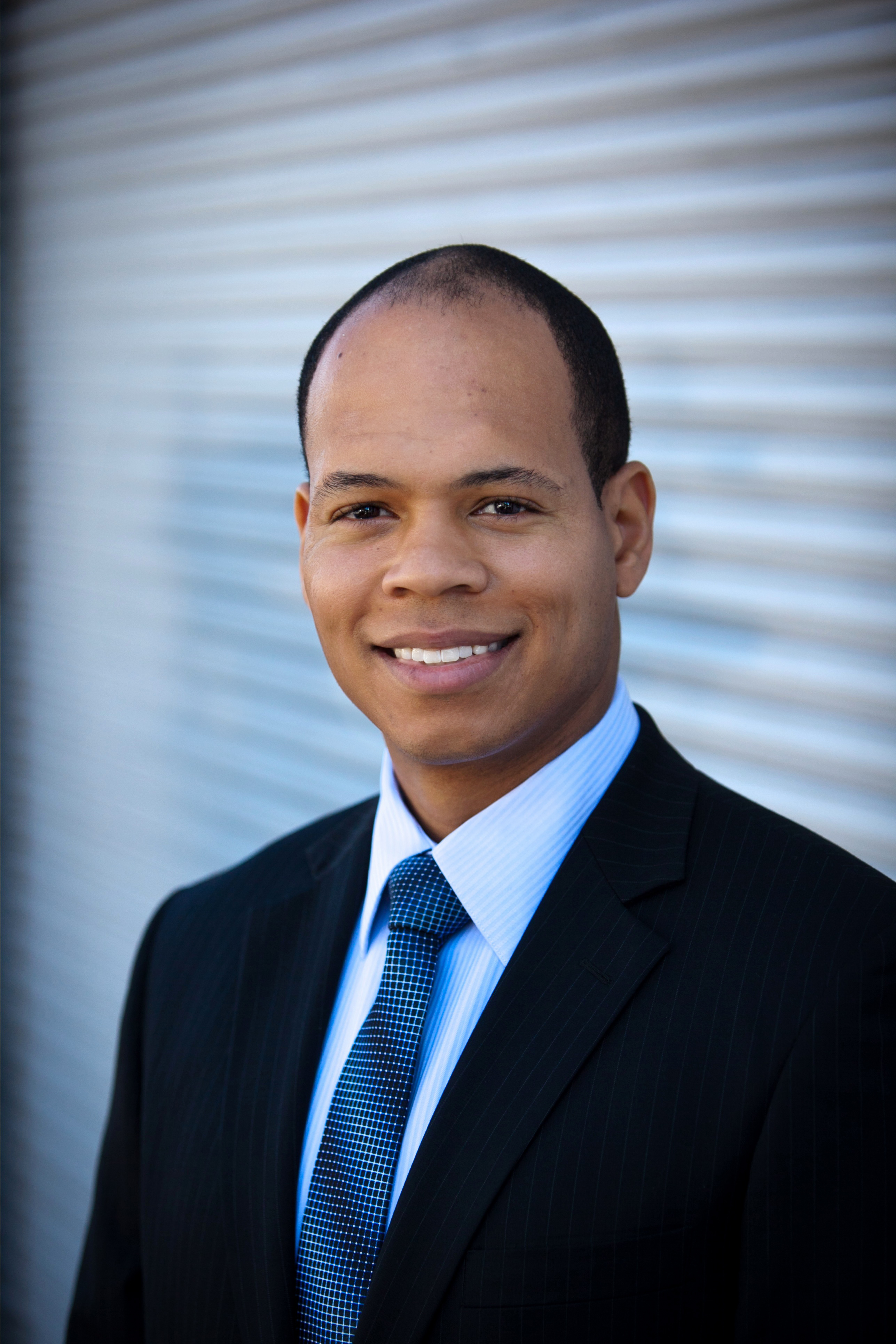
Randolph Ashton, PhD
Associate Director, Associate Professor of Biomedical Engineering, College of Engineering

How cells rust to death with age
By studying mouse models, scientists at the University of Wisconsin School of Medicine and Public Health have discovered how inflammation makes genetic instructions in muscle stem cells, or MuSCs, unreadable. DNA should tell the body how to regulate iron, so without those regulations, cells rust to death in a process called ferroptosis.

A new approach to “hypoimmune” gene editing of pluripotent stem cell therapies
The Brown Lab, led by SCRMC member Matthew E. Brown, PhD, assistant professor in the Division of Transplantation, recently published an article describing its new approach to “hypoimmune” gene editing of pluripotent stem cell (PSC) therapies. The article, titled “Diminished Immune Cell Adhesion in Hypoimmune ICAM-1 Knockout Pluripotent Stem Cells,” was published on the prestigious open access journal Nature Communications.

SURF program brings students not to the beach, but to the bench
The SURF program, also known as the Summer Undergraduate Research Fellowship program, welcomed students not to the beach, but to the bench, as six talented undergraduate students spent their summers working in various stem cell labs across campus. This unique experience led by the Stem Cell and Regenerative Medicine Center (SCRMC) Graduate Student Association (GSA) and funded by WiCell, pairs graduate students or postdoctoral fellow mentors with motivated undergraduate students for 10-weeks of collaborative research in stem cell and regenerative medicine.

Bioengineered arteries show promise for cardiovascular surgery
In a new study published in Cell Reports Medicine, scientists created a universal, small diameter, vascular graft using stem cell-derived arterial endothelial cells (AECs) that could advance the field of vascular bypass surgery.

Portia is primed for battle: How a postdoctoral research associate is helping to harness the human immune system to fight cancer
Harnessing the human body’s power to combat cancer is all in a day’s work for University of Wisconsin–Madison postdoctoral research associate, Portia Smith, PhD. Whether she is engineering white blood cells to fight tumors or exploring the mechanisms behind the deadliest forms of cancer, Smith is determined to help the human immune system win the battle against cancer.

Meet the 2025 SCRMC Research Training Award Winners!
Congratulations to the 2025 SCRMC Research Training Award Winners!
The SCRMC Research Training Awards Program provides unique, interdisciplinary training for five future leaders in stem cell and regenerative medicine research. Additionally, this program will foster interdisciplinary collaborations among campus investigators.
The award was established in 2008 to recognize and provide support for promising graduate students and postdoctoral fellows of all citizenships conducting stem cell and regenerative medicine research at the University of Wisconsin-Madison.
The SCRMC and the awardees would like to thank those who philanthropically support the SCRMC and make these awards possible.

SCRMC researchers to investigate mechanisms and models related to Spina Bifida and Fragile X Syndrome
Stem Cell and Regenerative Medicine Center (SCRMC) investigators at the University of Wisconsin–Madison will be engaging in two novel, neural research projects thanks to a gift from the Wisconsin Alumni Research Foundation (WARF).
The projects will seek to create cell culture models capable of predicting the risk of Spina Bifida (SB) and explore the molecular mechanisms that contribute to neurodevelopmental disorders such as fragile X syndrome (FXS). Both projects will use induced pluripotent stem cell (iPSC) lines, which are cells derived from adult somatic cells that have been reprogrammed to become pluripotent, in other words, they can differentiate into any cell or tissue in the body. The iPSCs generated from these projects will be deposited to WiCell and shared with the scientific community.
SCRMC investigators will advance the science of blood stem cell biology through five novel projects
Five innovative projects studying blood stem cells are currently underway at the University of Wisconsin–Madison. Led by Stem Cell and Regenerative Medicine Center (SCRMC) investigators and supported by a gift from the Wisconsin Alumni Research Foundation (WARF), these projects will investigate a wide variety of blood-based processes, from the role of inflammation in blood cell genome function and blood cell-derived pathologies e.g., cancer, to what impacts blood cell aging.
The goal of these projects is to advance the science of stem cell biology through collaboration. Investigators across campus will be working together to conduct novel research that will provide the steppingstones for medical breakthroughs related to blood disorders.
SCRMC investigators will advance cardiovascular stem cell research through three innovative projects
Cardiovascular diseases remain the leading cause of death worldwide, but three innovative projects underway at the University of Wisconsin–Madison are helping to change that. Led by Stem Cell and Regenerative Medicine Center (SCRMC) investigators and supported by a gift from the Wisconsin Alumni Research Foundation (WARF), these projects will explore the development of improved stem cell models, equipment, and increase understanding of disease mechanisms.
Parkinson’s treatment tested at UW showing promise in first clinical trial
Parkinson’s patients are receiving a new investigational treatment after a successful study at the University of Wisconsin–Madison helped demonstrate the cell therapy’s safety in non-human primates and refine the method for its delivery. Now, the biotechnology company running the trial is reporting encouraging results.
Aspen Neuroscience recently announced they would enroll a third group of patients in their trial, called ASPIRO. The ASPIRO trial is referred to as Phase 1/2a, a stage designed to evaluate an investigational treatment’s safety and most effective dose in humans.
The patients already enrolled in the trial are safely tolerating the treatment, in which new brain cells, called neurons, are grown from the patients’ own cells and grafted into key parts of the brain. Their doctors have noted improvement in patients’ Parkinson’s symptoms, potentially providing promise for people living with this debilitating neurological disease.
Several SCRMC members receive Research Forward grants
Stem Cell and Regenerative Medicine members will receive four of the nine Research Forward grants hosted by the Office of the Vice Chancellor for Research (OVCR) and sponsored by the Wisconsin Alumni Research Foundation (WARF).
These competitive grants facilitate groundbreaking, collaborative, high-risk, high-impact, and transformative research at the University of Wisconsin–Madison. Research teams will receive funding for one to two years, depending on the needs and scope of the project.

Steenbock professorship awarded to Marina Emborg, MD, PhD
Marina Emborg, professor of medical physics, director of the Preclinical Parkinson’s Research Program at the Wisconsin National Primate Research Center, and SCRMC member, has been named recipients of UW–Madison Steenbock Professorships.
SCRMC faculty members receive OVCR named Professorships, Kellett Fellowships, and Romnes Awards
Several Stem Cell and Regenerative Medicine Center faculty members will receive 2025-26 WARF Named Professorships, Kellett Fellowships, and Romnes Awards from the Office of the Vice Chancellor for Research (OVCR).
The fellowship awards are reserved for those that push the boundaries of discovery and demonstrate a commitment to the Wisconsin Idea. Any technology that arises from these efforts is licensed by the Wisconsin Alumni Research Foundation (WARF) and the income from successful licenses is returned to the OVCR, where it’s used to fund research activities and awards throughout the divisions on campus.
Please join us in congratulating the SCRMC faculty members who earned these prestigious fellowships and awards.
Weibo Cai elected as fellow of the American Association for the Advancement of Science
Weibo Cai, PhD, professor of radiology and medical physics and SCRMC member, is one of seven UW–Madison scholars elected as fellows of the American Association for the Advancement of Science (AAAS): The honor, presented annually by AAAS since 1874, recognizes fellows who are distinguished by their achievements across their disciplines.
 Save the Date: September 4, 2026
On September 5, more than 200 students, faculty,
researchers, and industry members joined the SCRMC for a
day of networking, keynote speakers, blitz talks, a poster
competition, and so much more. A special thank you to the
SCRMC Research Training Award winners who organize this
event.
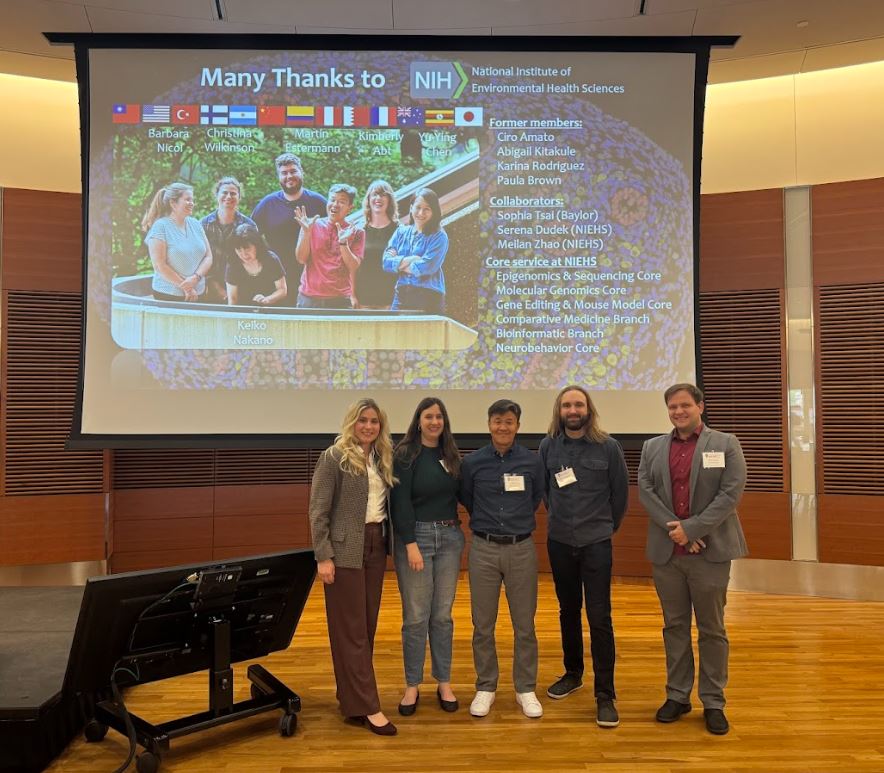
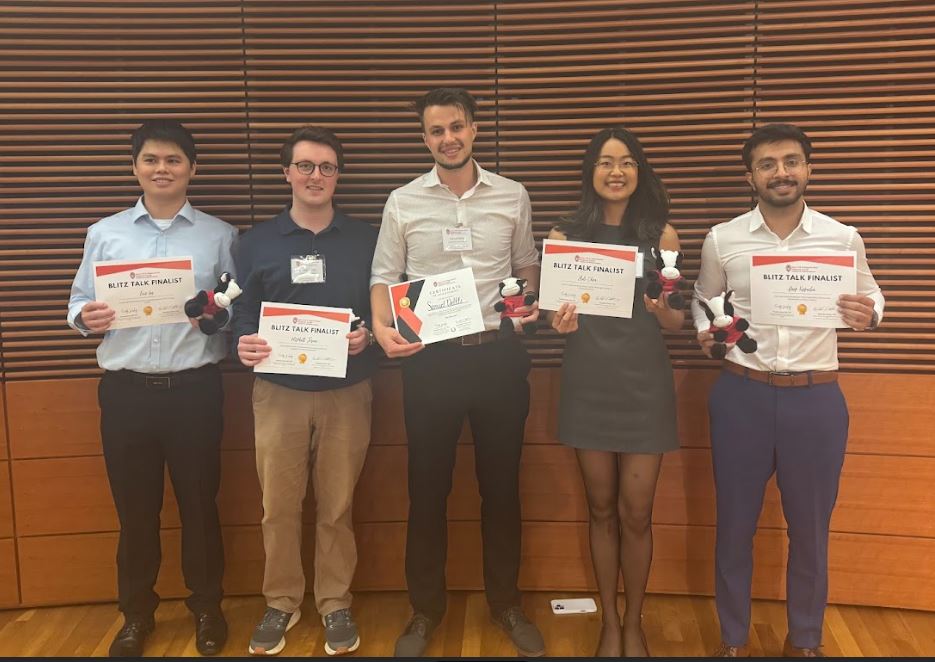
Congratulations to the Award Winners!
Poster 1st place: Mesenchymal GATA2 Regulates Epididymal
Morphogenesis via lnhba Signaling and Tissue Identity
Allyssa Fogarty, PhD Candidate, Comparative Biomedical
Sciences Program, Fei Zhao Laboratory
Poster 2nd place: The 9p21.3 Coronary Artery Disease Risk
Locus Drives GenomeWide Splicing Changes in
iPSC-Derived Vascular Smooth Muscle Cells via lncRNA
ANRIL, Shraddha Suryavanshi
PhD Candidate, Cellular and Molecular Biology Program,
Valentina Lo Sardo Laboratory
Poster 3rd place: A Novel Zebrafish Model for Diffuse
Midline Glioma, Alice Alhaj Kadour, PhD Student, Cellular
and Molecular Pathology Program, Owen Tamplin
Laboratory
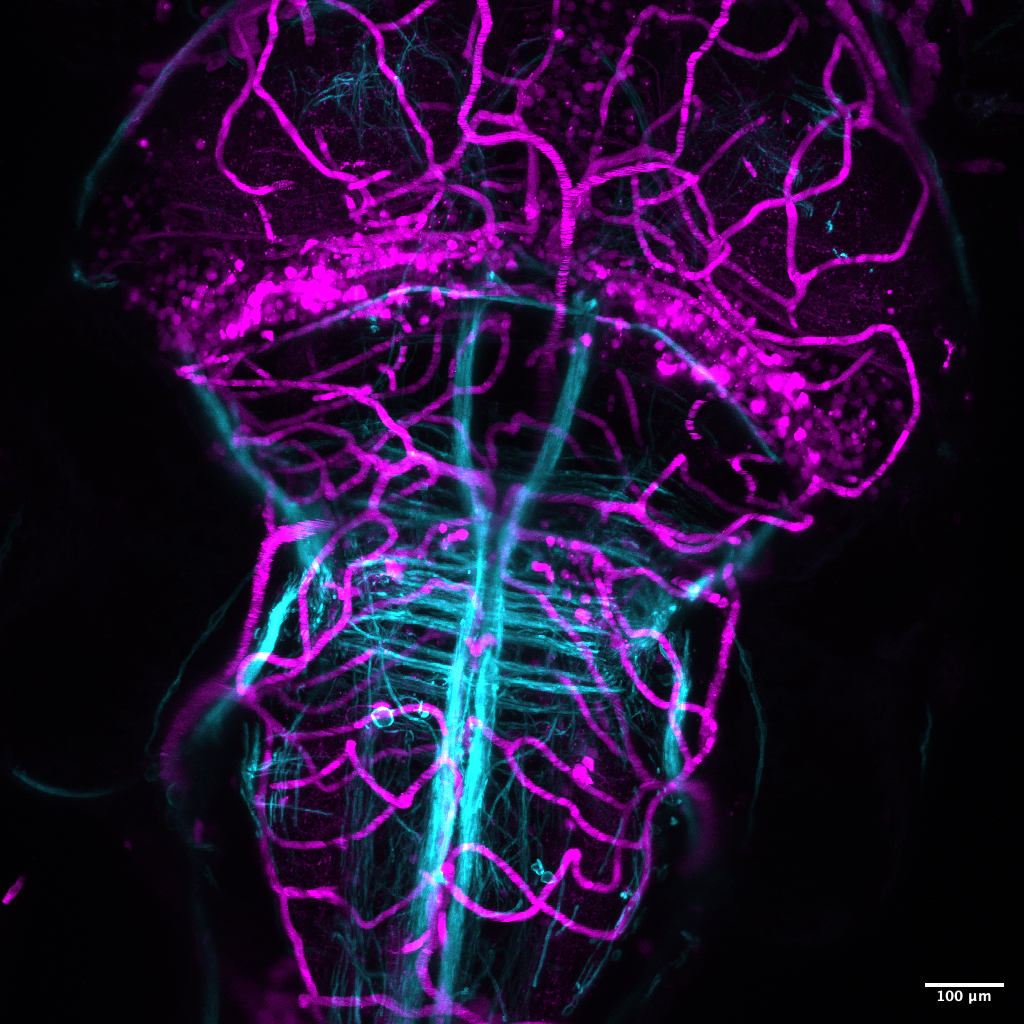
Cool Science Image Winner:
Alice Alhaj Kadour
a 7 day-post fertilization
(dpf) zebrafish brain
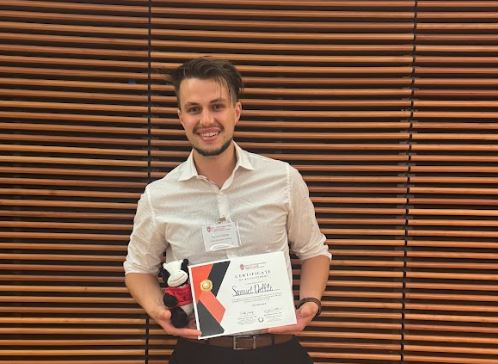
Blitz Talk Winner:
CCRS-Edited iHSPCs Show
Engraftment Promise in
NHP Models of HIV Cure
Samuel Dettle, PhD
Candidate, Cellular and
Molecular Pathology
Program, Igor Slukvin
Laboratory

Save the Date: April 15, 2026 for Decoding the Regenerative Dialogue Between Inflammatory and Stem Cell Pathways
In April 2025, more than 350 students, researchers, and industry professionals gathered for the 19th annual Wisconsin Stem Cell Symposium at the Biopharmaceutical Technology Center (BTC) on the Promega Corporation Campus in Fitchburg, Wis. The event, Translational and Commercial Applications of Stem-cell Derived Technologies, included a poster session and competition as well as presentations from scientific leaders who discussed fundamental and translational advances, which inform broader aspects of stem cell biology and molecular medicine.
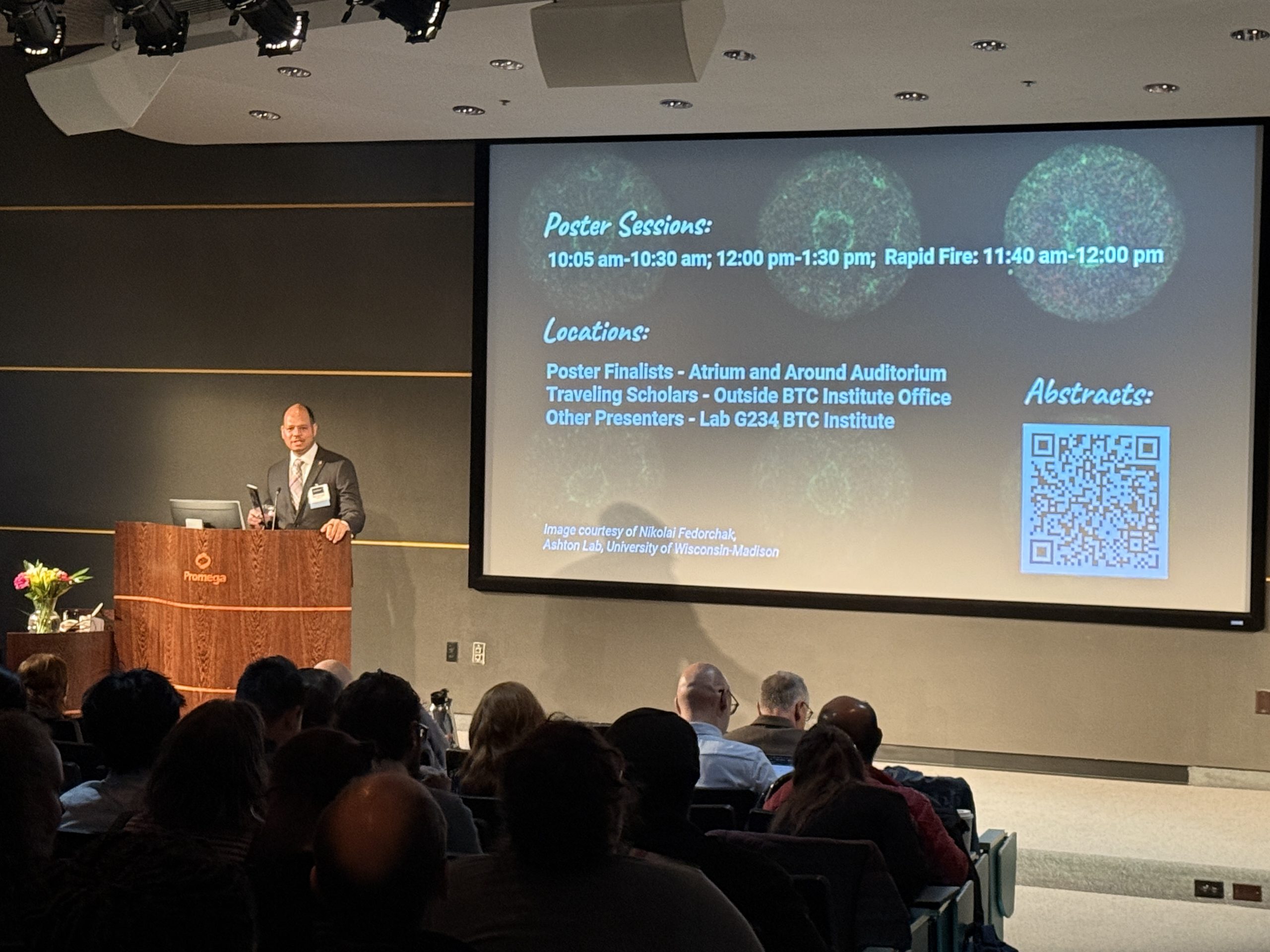
Please join us in congratulating the 2025 Wisconsin Stem Cell Symposium Poster
Competition Award Winners!
First prize: Soniya Tamhankar, University of Wisconsin–Madison
Forward programming identifies inducers of blood-brain barrier properties in hPSC-derived endothelial cells
Second Prize : Frank Seipel, University of Wisconsin–Madison
Late-born, NK1R+ Spinal Cord Interneurons for In Vitro Modeling of Afferent Pain Circuitry
Third Prize: Cesi Deng, University of Wisconsin–Madison
GABA produced by multiple bone marrow niche cell types regulates hematopoietic stem and progenitor cell
differentiation into B cells
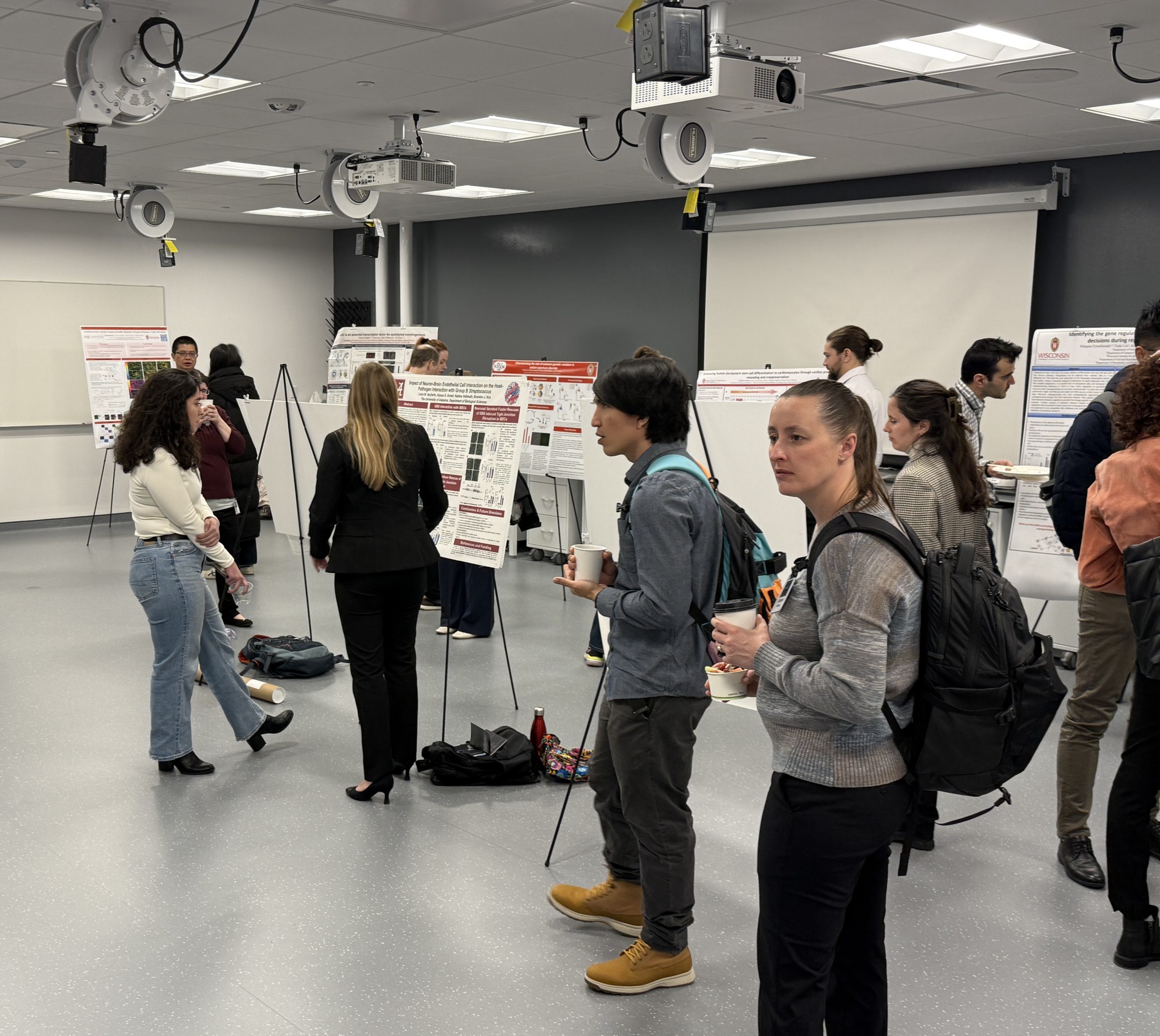
Congratulations to the 2025 Wisconsin Stem Cell Graduate Scholar Award Winners!
These scholars were selected to attend the conference and spend an additional day meeting with UW faculty
to learn about postdoctoral opportunities in stem cell biology at UW-Madison. The University of
Wisconsin-Madison Stem Cell & Regenerative Medicine Center (SCRMC) is committed to training future
leaders in stem cell research and is a proud sponsor of this program.
Adam Hall, Drexel University
Katherina Tavernini, Austrian Academy of Sciences
Nivedeta Krishna Kumar, University of Nebraska
Shiyu Xiao, Northwestern University
Morgen VanderGiessen, Virginia Tech
Bruno Ghirotto, Max Planck Institute